



From Vision to Production: When the End of the World Becomes a Story About Human Connection
Discover ‘The End’, a feature film project created for the Film Industry Short Course at ESE Rome, blending...
Read more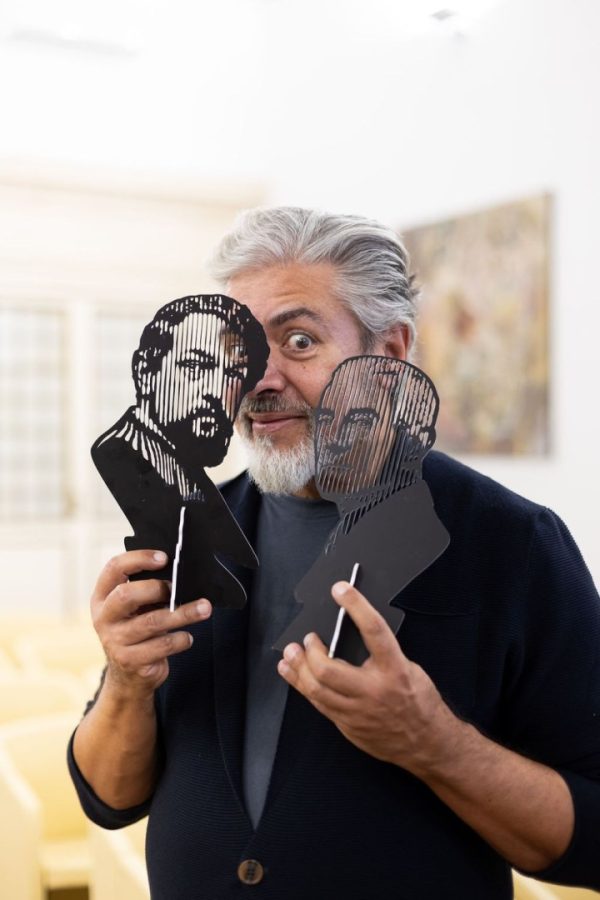
The European School of Economics – Rome Campus – recently had the pleasure of hosting an inspiring evening with Marcos Marin, the internationally acclaimed Brazilian artist whose distinctive portraits have captured the faces of heads of state, cultural icons and some of the most influential figures of our time.
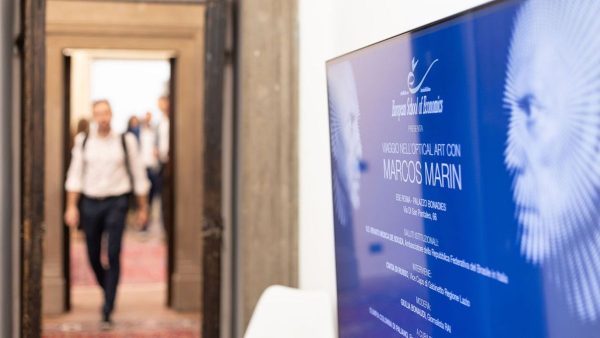
The event brought together voices from art, institutions and culture. S.E. Renato Mosca De Souza, Ambassador of the Federative Republic of Brazil to Italy, and Civita Di Russo, Deputy Chief of Staff of the Lazio Region, joined the conversation, introduced by ESE Campus Manager Anna Salvini. Organised by Olimpia Colonna and moderated by Giulia Bonaudi, the evening offered a unique opportunity to explore creativity, artistic vision and the human qualities behind extraordinary work.
It was also a particularly meaningful evening for the ESE community. Among the guests was Matteo Zaralli, ESE lecturer and former ESE student, whose experience of the evening became a reflection on something that goes far beyond art: the value of instinct in a world where more and more decisions can be delegated to technology.
One question from the audience captured the essence of Marin’s approach.
When he portrays someone, does he remain faithful to the original photographs?
His answer was simple: he always changes something.
A light. A detail. An expression.
There is never simply a copy. There is always a choice.
For Matteo, this was one of the ideas that remained long after the evening ended.
“I should start by saying that I am not someone who knows the art world in depth. Perhaps that is precisely why the experience left me with something that is difficult to put into words.
As Marin spoke, images of his works appeared behind him, including portraits created for heads of state and some of the most prominent personalities of our time. Yet it was not the images that stayed with me the most. It was the way he spoke about himself: direct, emotional and without filters. Something that no information found online can really convey.”
What struck Matteo most was Marin’s insistence that an artwork can change until the very last moment.
Because instinct and intuition remain at the heart of the creative process.
That idea immediately brought him back to a line from Ethan Mollick’s Co-Intelligence: “There is a lot of frustrated creative energy in the world.”
“Marin,” Matteo reflects, “is the exact opposite of that frustrated energy. He is creative energy that finds its way — and keeps changing its direction until the very end.”
The question becomes particularly relevant today.
We live in a world increasingly shaped by speed, productivity, artificial intelligence and the possibility of delegating more and more tasks. Technology allows us to do more, faster. But what happens if we delegate the final decision too? The small adjustment. The change of light. The instinctive choice that transforms something technically correct into something truly personal?
For Matteo, listening to an artist who built his career long before the age of AI made the answer particularly clear.
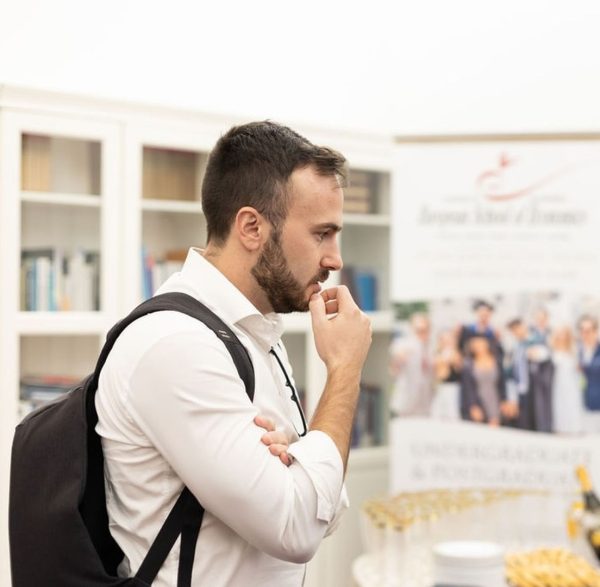
“It makes the value of human abilities even more evident: instinct, intuition, curiosity and imagination. They are the same qualities that lead an artist to look at a photograph and decide: no, that light is not right.”
Perhaps this is what an evening with Marcos Marin ultimately leaves us with.
Not simply a reflection on art, but a reminder of the qualities that remain at the heart of creativity — and of what it means to be human in an increasingly technological world.
The instinct you cannot delegate.
Ph: Giulia Gandini
Discover ‘The End’, a feature film project created for the Film Industry Short Course at ESE Rome, blending...
Read more
Discover how ESE’s Donatella Lorato, recognized by Forbes Italia as a top 100 woman of success, embodies leadership...
Read more
Discover Ex-Duco at ESE Florence. Our business school empowers students to become teachers, fostering leadership,...
Read more
Scopri come ESE Milano e The Longevity Suite ridefiniscono la leadership attraverso il benessere e la longevità...
Read more